In the ever-evolving landscape of modern medical technology, open scanners have emerged as crucial tools in the imaging sector. As the demand for non-invasive diagnostic procedures increases, open scanners are becoming more prevalent and essential in medical practices around the globe.
Their unique design and functionality cater to specific medical needs, offering advantages over traditional closed scanner systems. This article explores the concept of open scanners, their application in imaging, and their impact on the medical field.
The Basics of Open Scanners
Open scanners, distinct from their closed counterparts, are designed with open configurations that offer flexibility and comfort to patients. These scanners are primarily used in magnetic resonance imaging (MRI) with a configuration that reduces claustrophobic sensations, making them an excellent alternative for patients uncomfortable with traditional closed systems. The innovative design of open scanners allows for more freedom in positioning the patient, which can be critical for certain diagnostic needs. Although the magnetic field strength of open scanners is generally lower than that of traditional closed scanners, technological advancements continue to enhance their performance. This evolution ensures that open scanners remain competitive within the spectrum of imaging technologies available in modern healthcare.
The importance of open scanners cannot be overstated in pediatrics and for patients with disabilities. Their open design is less intimidating, which can be a significant factor for children and anxious patients who may otherwise find closed environments distressing. Furthermore, open scanners enable medical staff to maintain visual contact with patients during the scanning procedure, providing reassurance and enhancing the overall patient experience. This is particularly beneficial in hospital settings where patient comfort and satisfaction are integral to the quality of care. Additionally, this design provides a comfortable environment needed to accommodate larger patients who may otherwise face limitations with traditional imaging systems.
The Role of Open Scanners in Modern Imaging
In contemporary imaging, open scanners play a pivotal role by offering an alternative to traditional MRI systems. The open design allows for more versatile scanning procedures, accommodating patients with mobility issues or those unable to fit comfortably within narrow, tube-like closed scanners. Open scanners have become especially important in facilities that emphasize comprehensive and inclusive patient care. By providing more spacious and comfortable scanning environments, they reduce the need for sedation or anesthesia, which is significant for patients who may be at risk due to prolonged or complex scanning procedures. Thus, open scanners promote a more patient-friendly experience in modern healthcare institutions.
Historically, a challenge of open scanners has been the potential trade-offs in image quality due to lower magnetic field strengths. However, ongoing advancements in scanner technology are addressing these challenges by enhancing image resolution and processing capabilities. This progress ensures that open scanners continue to deliver high-quality diagnostic images, thereby extending their applicability in various medical disciplines. These technological enhancements demonstrate the adaptability and growing importance of open scanners in meeting the increasing demands of medical imaging. As healthcare continues to embrace more sophisticated diagnostic tools, open scanners are expected to play a more significant role in delivering precise, patient-centric imaging services.
The Future of Open Scanners
As we look towards the future, the development of open scanners is poised to make significant contributions to the imaging field. The continuous improvement of open scanner technology will likely see enhancements in image clarity and scanning speed, making them even more competitive with closed MRI systems. Innovations aimed at boosting magnetic field strength and improving computer-aided imaging processes are also on the horizon. Such developments would further close the gap between open and closed systems, enhancing the viability of open scanners for a broader range of medical applications. Consequently, open scanners are expected to become an indispensable component of modern diagnostic imaging.
Incorporating artificial intelligence (AI) into open scanner technology represents another exciting frontier. AI can play a crucial role in image analysis and interpretation, which can expedite the diagnostic process and reduce human error. These technological advancements, coupled with the intrinsic patient comfort factors of open scanners, create a promising outlook for their adoption in diverse medical fields. As AI technology evolves, it is anticipated that open scanners will integrate more seamlessly into healthcare systems, creating a more efficient and effective diagnostic environment. This synthesis of technology and patient-centered design will forge a new era for medical imaging, underscoring the transformative potential of open scanners.
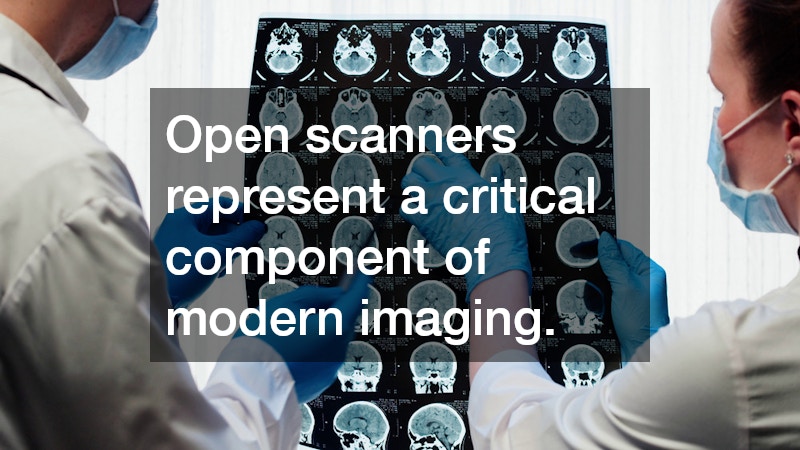
Open scanners represent a critical component of modern imaging, offering unique benefits that distinguish them from traditional closed systems. Through ongoing technological advancements, they continue to expand their role in delivering high-quality, patient-centered diagnostic services. From enhancing patient comfort to accommodating complex scanning procedures, their contributions to medical imaging are both significant and multifaceted. As the demand for versatile and accessible medical technologies grows, open scanners are likely to play an increasingly vital role in the healthcare industry. Embracing their potential can lead to more inclusive, effective, and sustainable diagnostic practices in the years to come.