As people age or face health challenges, maintaining independence often becomes a top priority. Remaining in a familiar environment can provide comfort, emotional stability, and a greater sense of control over daily life. Home care services play a critical role in making independent living possible while still ensuring safety, support, and quality of life.
Home care is designed to assist individuals who want to stay in their own homes but may need help with everyday tasks or personal care. These services are flexible, adaptable, and tailored to meet a wide range of needs, allowing individuals to receive the right level of assistance without sacrificing independence.
What Home Care Really Means
Home care refers to non-medical and, in some cases, medical support provided in a person’s home. Unlike institutional care settings, these services focus on helping individuals maintain their routines and lifestyles while receiving necessary assistance. Care plans are often customized based on physical abilities, health conditions, and personal preferences.
Common home care services include help with daily activities, companionship, and monitoring overall well-being. This approach allows individuals to age in place while reducing the risks associated with living alone.
How Home Care Supports Daily Independence
One of the greatest benefits of home care is the way it empowers individuals to continue managing their own lives. Rather than taking over, caregivers provide support where it’s needed most. This balance helps preserve dignity and autonomy.
Daily support may include:
-
Assistance with bathing, dressing, and grooming
-
Help with meal preparation and light housekeeping
-
Medication reminders and routine monitoring
-
Mobility support and fall prevention
By addressing these needs, home care allows individuals to focus on what they can do independently while receiving help with tasks that may have become challenging.
Emotional and Social Benefits of Home Care
Independent living isn’t just about physical ability—it’s also about emotional well-being. Loneliness and isolation can have serious effects on mental and emotional health, especially for seniors. Home care often includes companionship, conversation, and meaningful interaction that can significantly improve quality of life.
Caregivers provide:
-
Social engagement and emotional support
-
Assistance with hobbies and daily routines
-
Transportation to appointments or social activities
These interactions help individuals stay connected and engaged, which is essential for overall wellness.
Safety and Peace of Mind at Home
Safety is a common concern for individuals living alone and for their families. Home care services help reduce risks by providing oversight and assistance that can prevent accidents and identify issues early.
Caregivers are trained to notice changes in behavior, mobility, or health that may indicate a developing problem. Early intervention can help avoid hospitalizations and more serious complications. For families, home care offers peace of mind knowing that a loved one is not facing daily challenges alone.
Flexible Care That Adapts Over Time
Another major advantage of home care is flexibility. Needs often change over time, and care plans can be adjusted accordingly. Whether someone requires a few hours of assistance each week or more consistent daily support, services can scale up or down as necessary.
This adaptability makes home care a long-term solution rather than a temporary fix. Individuals can remain in control of their care decisions while adjusting support as their circumstances evolve.
Supporting Family Caregivers
Home care doesn’t only benefit the individual receiving services—it also supports family members. Many families want to help their loved ones but may struggle to balance caregiving with work and personal responsibilities.
Professional home care can:
-
Reduce caregiver burnout
-
Provide respite and relief
-
Ensure consistent, reliable support
This partnership allows families to focus on quality time rather than constant caregiving demands.
Choosing the Right Home Care Services
Selecting the right provider is an important step. A quality home care service will prioritize personalized care, clear communication, and consistency. Asking questions about caregiver training, scheduling flexibility, and care planning can help ensure the best possible experience.
The right home care solution should feel supportive rather than intrusive, empowering individuals to live safely and comfortably on their own terms.
A Path to Confident Independent Living
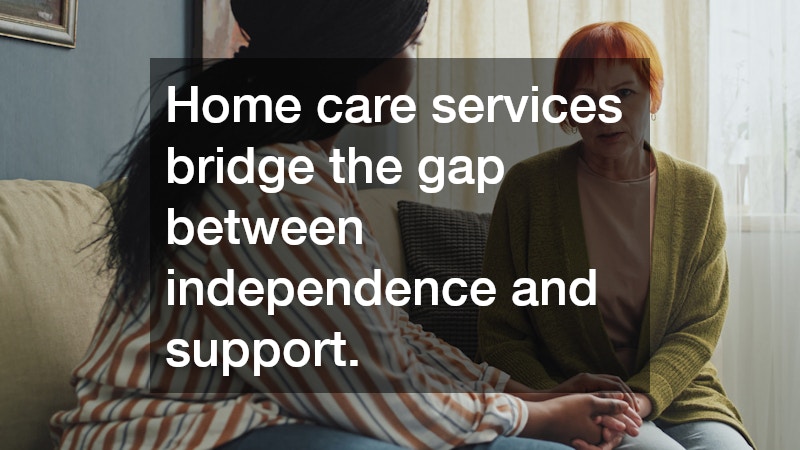
Home care services bridge the gap between independence and support. By offering personalized assistance, emotional connection, and safety-focused care, these services make it possible for individuals to remain in their homes while maintaining dignity and quality of life.
For those seeking a solution that respects independence while providing dependable support, home care continues to be one of the most effective and compassionate options available.